Wood vs Resin vs Ceramic Animal Figurines: Which to Choose?
Wood is the lightest of the three, the least likely to break in the post, and the only one that takes a clean, permanent engraved name. Resin holds fine detail at the lowest cost but chips at thin edges when dropped, and ceramic looks glossy and feels substantial but is the most fragile to pack and ship. Choose by where the piece will live, how it will travel, and whether it needs a name on it.
What actually differs between wood, resin and ceramic figurines?
The three materials start from different places, and everything else follows from that. A wooden figurine is carved from solid timber, so its grain and weight come from a material that was once a tree, and no two pieces start quite the same. Resin begins as a liquid poured into a mould, which lets a maker copy almost any shape, however intricate, and repeat it exactly. Ceramic is shaped from clay and fired, then usually glazed, which gives it a hard, glassy surface.
The short version: wood is the lightest and the most forgiving if dropped or posted, resin offers the most detail for the least money but chips at thin edges, and ceramic has the most polished, weighty feel but is the one most likely to arrive broken. The rest of this page takes each difference in turn — weight and feel, breakage, shipping, personalisation and price — so you can match the material to the person or the shop.
Which material weighs less and feels better in the hand?
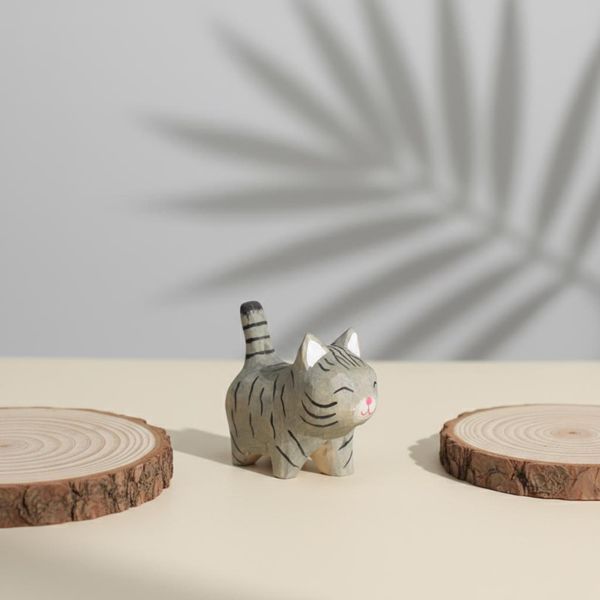
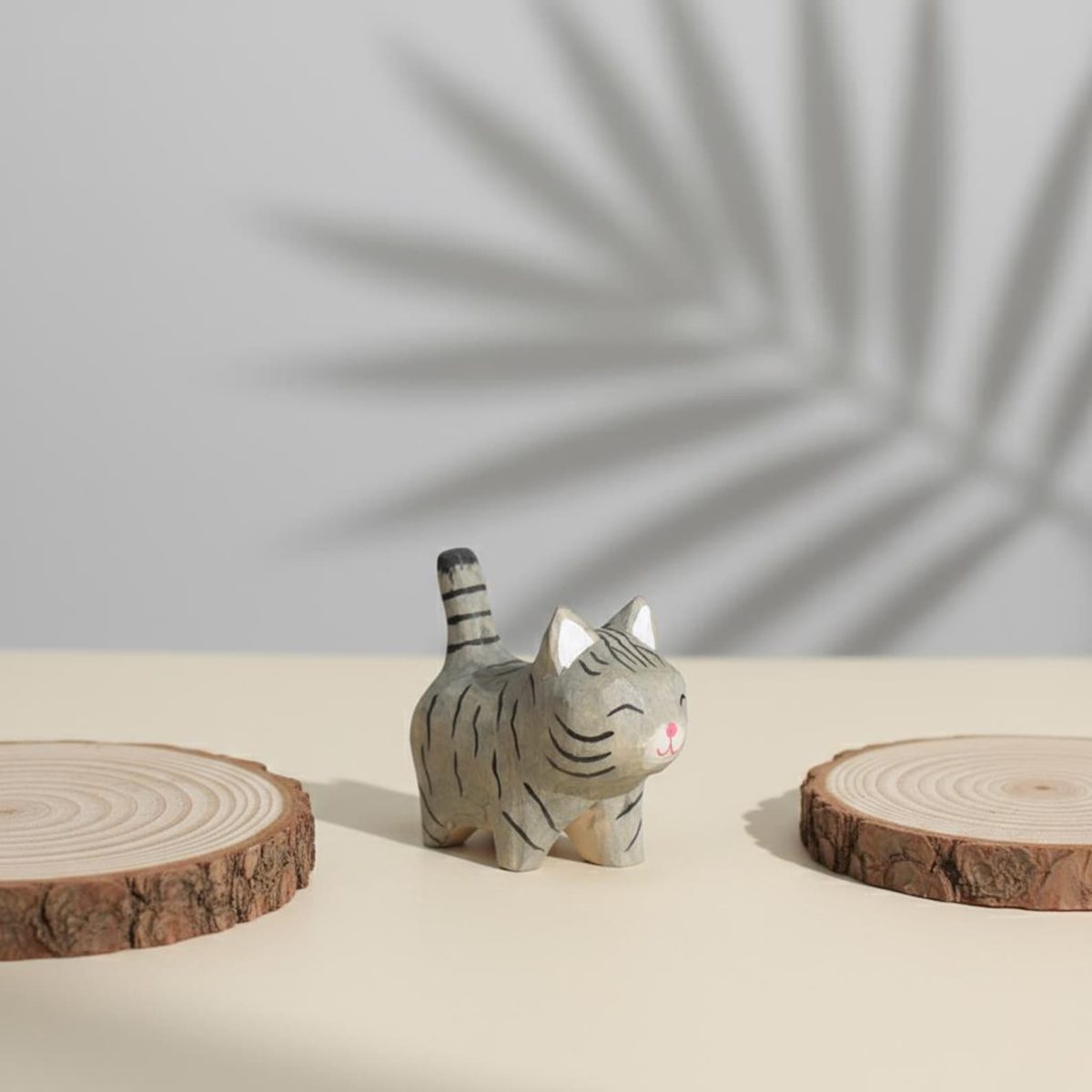
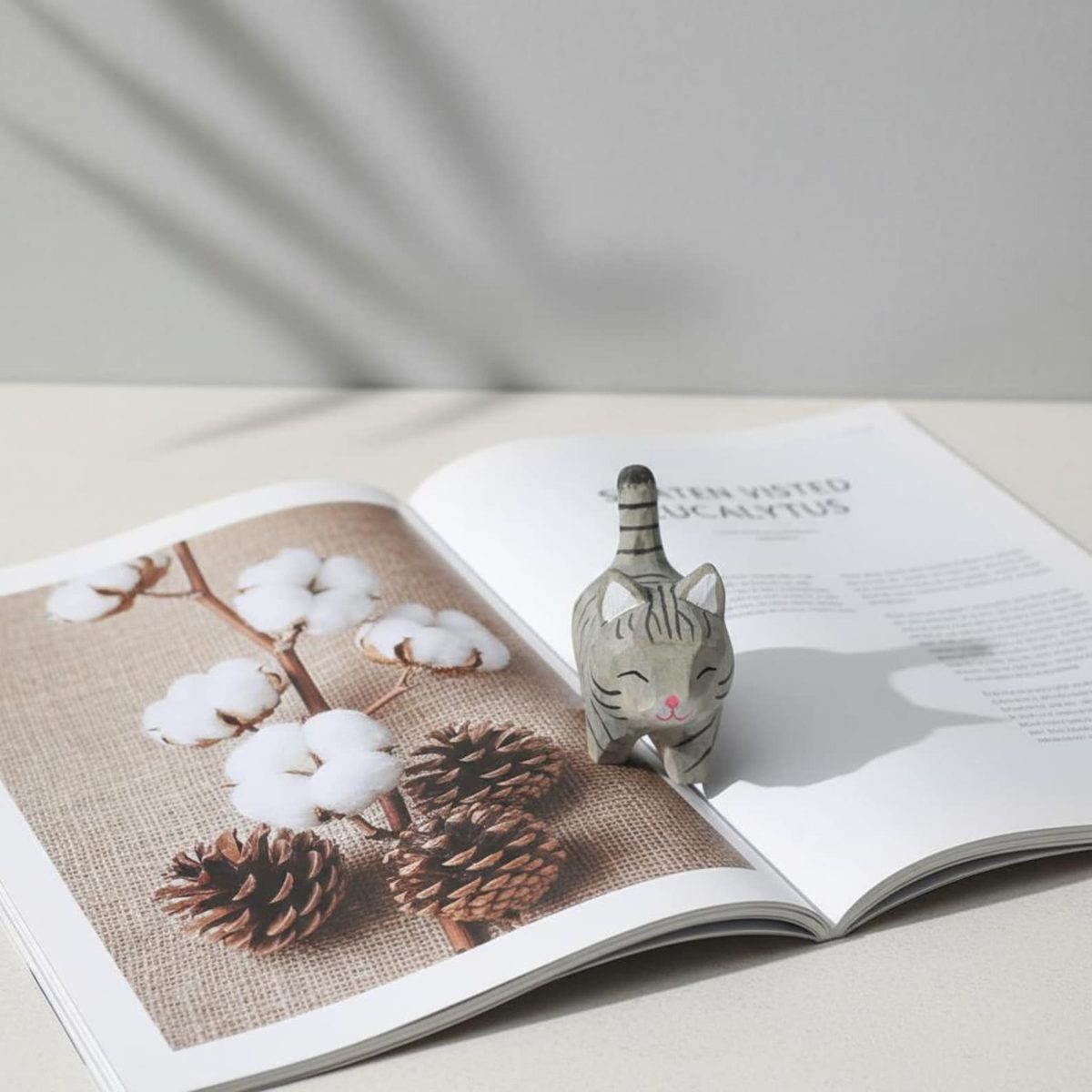
Wood is lighter than both rivals at the same size, because most carving timbers are less dense than water. A solid hand-carved cat such as our Faceted Grey Tabby Cat lifts out of a display with no effort, and the surface feels warm within seconds of being held. That warmth is not a marketing phrase: wood is a poor conductor of heat, so it never has the cold shock of glazed ceramic or cast resin on a winter morning.
Resin sits in between: heavier than wood at the same size, cool to the touch, with a smooth, slightly plastic feel. It can reproduce fur, feathers and drapery in fine relief, but the surface reads the same wherever you touch it. Ceramic is as heavy or heavier, and the glaze makes it hard, slippery and cold — qualities some people love in a paperweight and others find unfriendly.
If you run a shop, weight and feel are commercial facts, not trivia. Small wooden animals are the classic till-point purchase precisely because customers pick them up, and a piece that is pleasant to hold gets picked up more often. Our guide on small wooden animals as till-point gifts covers that habit in detail.
Which is least likely to break at home and in the post?
Ceramic is the most fragile of the three. Dropped on a hard floor it shatters into sharp pieces, and in transit it needs thick wrapping, a sturdy box and careful handling — which raises both the packing cost and the chance of a breakage claim. For anything that will be posted as a gift, or shipped by the carton to a shop, that fragility is the first thing to price in.
Resin is tougher than ceramic but not forgiving in the way wood is. A fall usually leaves it whole, yet thin sections — ear tips, tails, whiskers, the corners of a base — chip or snap off, and a chipped edge on resin cannot be repaired invisibly. The damage is often at the exact detail that made the piece attractive.
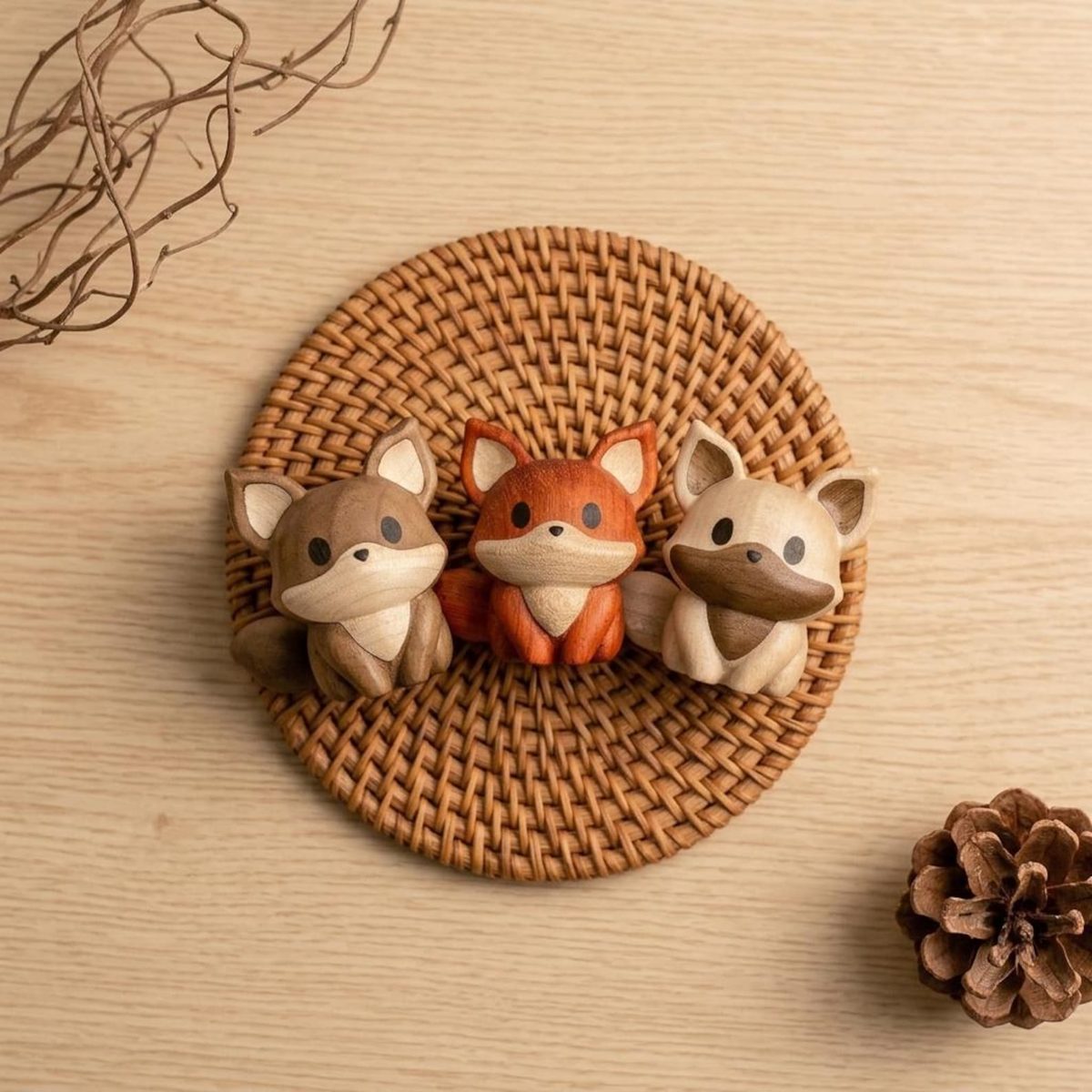
Wood takes a knock best of the three. The worst ordinary outcome is a shallow dent or a scuff in the paint, and a dent in timber stays a dent rather than becoming a crack. For posted gifts that matters: a wooden figure wrapped in a few layers of tissue survives journeys that would end a ceramic one, and our care guide explains the little maintenance a hand-painted wooden piece asks for.
Which material takes personalisation best?
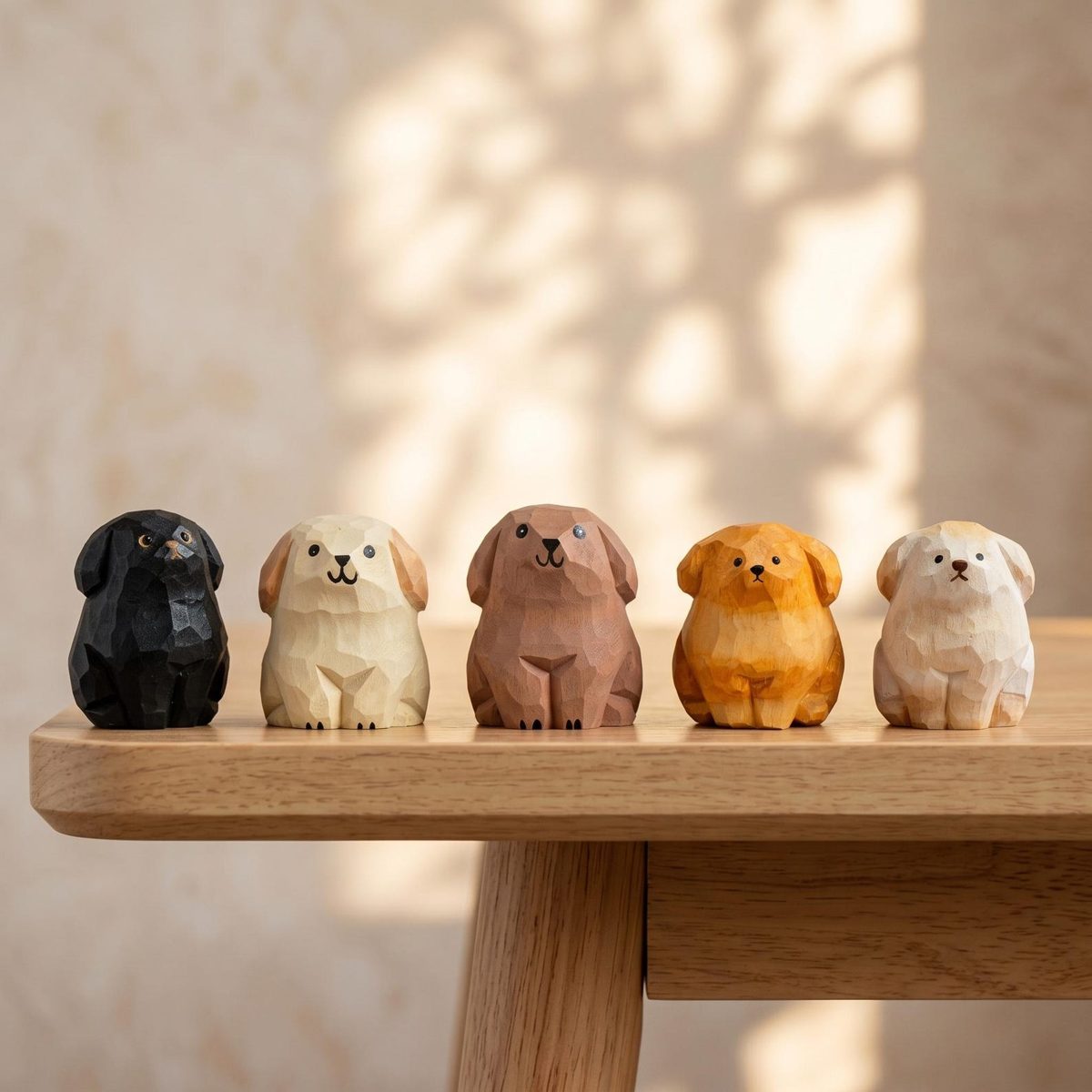
Wood, clearly. A name, a date or a short line can be laser-engraved or carved into the base, cutting cleanly into the timber so the letters are deep enough to feel and permanent enough to outlast the paint around them. That is why engraved wooden gifts have become their own category — see our personalised gifts page for the pieces that take a name.
Resin cannot be engraved satisfactorily. Cut into it and the material tears white and fuzzy rather than scoring clean; personalisation on resin is done in the mould itself or printed on the surface, both of which fix the wording at the factory and limit it to large runs. Ceramic can be hand-painted or transfer-printed before firing, which suits names but not late changes, and engraving fired glaze risks cracking it.
The practical consequence for gift buyers: if the words matter — a pet's name, a wedding date, a baby's first Christmas — wood is the material that carries them. Every piece in our range that shows an engraving option on its page can be personalised in exactly that way.
What about price — and what do you get at each level?
In broad, honest terms: mass-produced resin sits at the bottom of the price range, because a mould amortises its cost across thousands of identical pieces. Hand-painted ceramic runs mid to high, since each piece needs firing and often hand decoration, plus a margin for the ones that do not survive the kiln or the journey. Hand-carved wood usually sits at the top, because a person shapes and paints each piece individually and the material itself is costlier than powder or liquid.
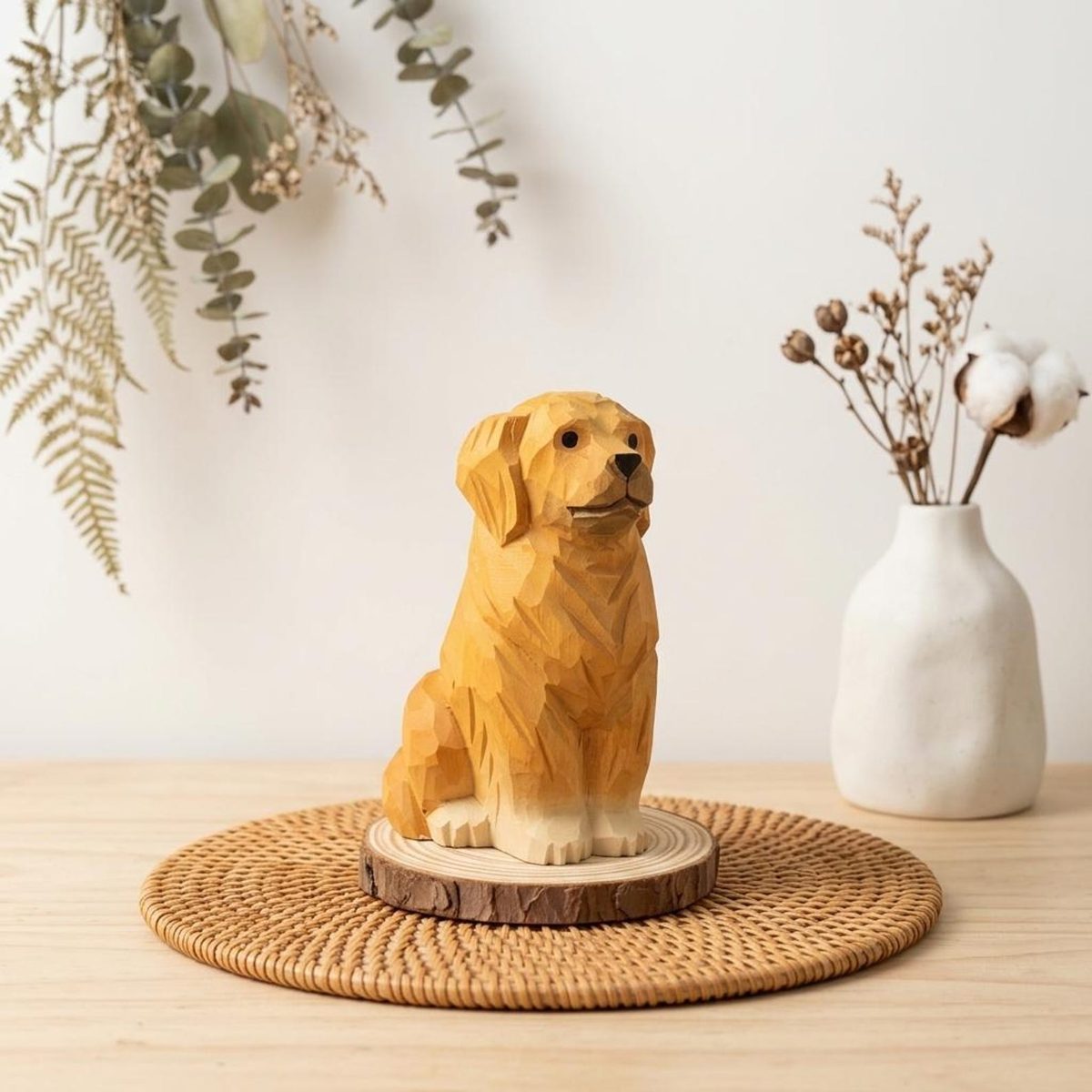
Price differences are therefore differences in what you are buying, not in virtue. Resin buys consistency and intricate detail cheaply. Ceramic buys gloss, weight and a long decorative tradition. Hand-carved wood buys a piece nobody else owns: the grain, the knife strokes and the brushwork vary from one figurine to the next, which is exactly the point for a keepsake and often irrelevant for a window display.
We make hand-carved, hand-painted wooden figures only, so we are not pretending to be neutral — but the comparison above is the one we would want a customer to read before choosing us. Browse the collection to see what that price level looks like in practice.
How should a gift shop choose between the three?
For retailers the decision is less about one perfect material than about what each does to the bottom line. Wooden stock ships well from the wholesaler, survives the journey to the customer's home, and earns its place at the till because it invites handling. Ceramic earns higher shelf prices but expect occasional transit breakage and pack it accordingly. Resin fills a mid-price shelf with consistent detail and is the practical choice when a shop wants dozens of the same design.
A mixed display usually works best: wood at the till and in the personalised section, where its warmth and engravability do the selling; resin and ceramic where price points or a particular look call for them. Shops buying wholesale can see our trade terms and request a price list on the wholesale page, and any of the engraved designs can be produced for bulk orders with a name added for individual customers.
For gift buyers, the same logic shrinks to three questions. Will it be posted? Choose wood. Does it need a name on it? Choose wood. Does the recipient love glossy, weighty things and nobody in the house is clumsy? Ceramic will delight. If the honest answer is 'some of each', that is what most shelves end up looking like.
Frequently asked questions
Which is more durable, a wooden or a resin figurine?
Wood, on balance. A drop that chips a thin resin edge — an ear, a tail, a base corner — usually leaves only a dent or paint scuff on wood, and a dent stays put instead of spreading into a crack. Both materials dislike water: wipe them dry rather than washing them, and keep them out of damp rooms. Neither belongs in a dishwasher or on a sunny windowsill for years on end.
Are ceramic figurines more fragile than wooden ones?
Yes, noticeably. Fired and glazed ceramic shatters when it falls and produces sharp fragments, while a wooden figurine of the same size most often survives with a dent or a scuff in the paint. The same gap shows in shipping: ceramics need heavy wrapping and still break sometimes, whereas wooden pieces travel in light packaging. If a gift has a long journey ahead, wood is the safer material to post.
Can you engrave a name on a resin figurine?
Not cleanly. Engraving tears the resin surface white and fuzzy rather than cutting a crisp letter, so makers personalise resin by moulding the wording in or printing on top, which fixes the text at the factory. Wood engraves beautifully — a laser or a graver cuts deep, legible letters that can be felt with a fingertip. If an engraved name is the point of the gift, choose a wooden piece designed for it.
Do hand-painted wooden figurines fade or wear over time?
Very slowly under normal indoor use. Keep a piece out of long hours of direct sun, away from radiators and damp, and dust it with a soft dry cloth, and the paint stays fresh for years. Fine hairline crazing can appear on paint coats over very long periods; it is part of the material's age rather than damage. Avoid wiping with wet or chemical cloths, which is the one habit that genuinely shortens a finish.
Which material is best for a pet memorial gift?
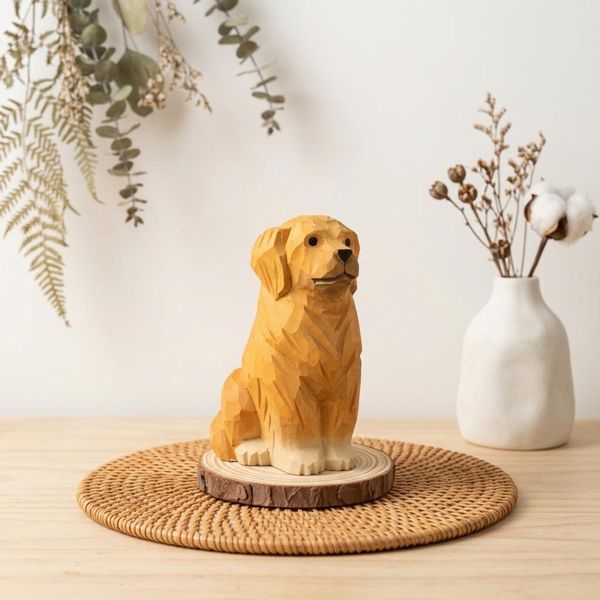
Wood suits most memorial gifts because the two things people want — an engraved name and something warm to hold — are exactly what it does best. A hand-carved figure matched to the pet's breed and coat colour, with a name and dates cut into the base, works on a shelf beside a photograph. If the memorial is meant for a grave or the garden, a purpose-made outdoor plaque is the right tool instead.