How to Care for Hand-Painted Wooden Figurines
To clean a hand-painted wooden figurine, dust it gently with a soft dry brush or cloth, keep it away from damp, radiators and long periods of strong sunlight, and avoid soaking it or using chemical cleaners. These are general care guidelines for painted wood, not a guarantee for any particular finish, so test any new method on a hidden spot first.
How do you dust a hand-painted wooden figurine?
Dusting is the only cleaning most wooden figurines ever need. Use a soft, dry brush, such as a clean make-up brush or a soft paintbrush, to lift dust out of the carved detail, and a soft dry cloth to wipe the flatter areas. Work gently and in one direction. Carved fur, feathers and facets all collect dust in their grooves, and a brush reaches into them better than a cloth does.
Hold the piece firmly by its base while you work, not by an ear, a tail or a beak, because the thinnest parts of a carving are the easiest to knock. Place a folded towel on the table underneath, so a slip does not become a drop onto a hard surface.
Dust a little and often. A quick brush every week or two is much easier on the paint than a deep clean once a year, and it stops dirt from settling into the carved detail where it is difficult to remove.
Can you use water or cleaning products on wooden figurines?
As a general rule, avoid them. Wood absorbs moisture, and soaking a carved piece can swell the wood and lift paint. Spray cleaners, wipes, solvents and polishes can also dull or mark a painted surface, and some leave a film that attracts more dust.
If a mark does not come off with a dry brush, use a cloth that is barely damp, wipe the spot lightly and dry it straight away with a soft cloth. Test the method first on a hidden area, such as the underside of the base, and stop if any colour comes onto the cloth. Never put a wooden figurine in a bowl of water or in a dishwasher.
We cannot give a promise about every finish, because each piece is different. If you are unsure, the safest approach is to leave a stubborn mark alone rather than to risk the paint.
- Use a soft dry brush and cloth first
- Avoid soaking, spray cleaners and wipes
- Test any damp-cloth method on a hidden spot
- Dry straight away if a cloth has been damp
Where should you display wooden figurines?
Choose a spot that is away from radiators, fires and heaters. Wood reacts to changes in temperature and humidity, and a position beside a heat source dries it quickly and may cause it to crack or the paint to shrink. A kitchen window above a kettle or a hob, or a bathroom with steam, is also not ideal.
Strong direct sunlight can fade painted colours over time, as it does with fabric and prints. A windowsill that is bright but not in full sun for hours at a time is usually fine, and a shelf in a well-lit room is better still. If a piece must sit in a window, turn it now and then so that one side does not take all of the light.
These are decorative items, so display them where they will be seen and not knocked. A shelf at the back of a table or a bookcase is better than the edge of a desk, particularly if you have pets that jump or children who like to explore.
How is natural unpainted wood different?
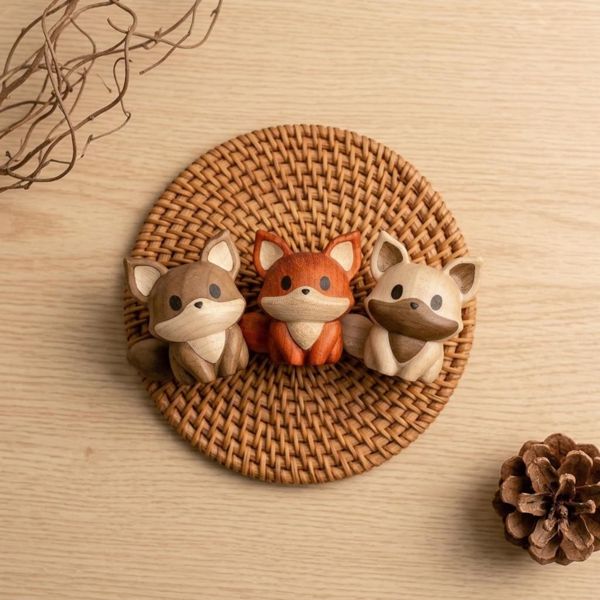
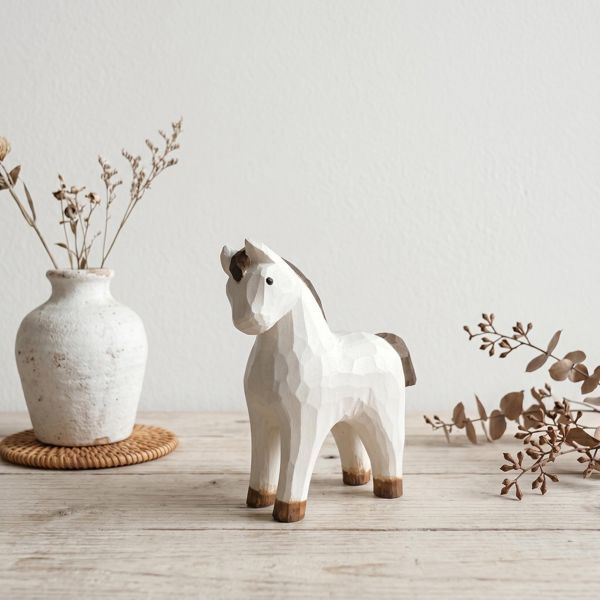
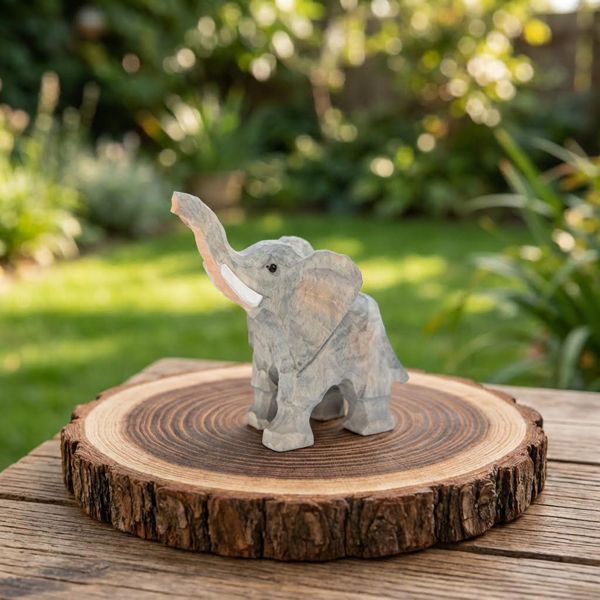
Some pieces are left without paint so that the grain can be seen. The Natural Wood Fox is a curled-up fox left in natural, unpainted wood, and the White Horse, Head Up is finished in a semi-transparent white so that the wood grain shows through. The Elephant, Trunk Raised is carved from linden wood and painted by hand.
The same simple care applies. Dust gently, and keep these pieces away from damp and strong heat. Natural wood can pick up marks from hands, so wash and dry your hands before handling a piece you want to keep looking clean.
Over time, natural wood may change in tone slightly, which many people regard as part of its character. If you prefer a piece to stay as it is, keep it out of strong sunlight.
What should you do about small marks or chips?
Handle the piece as little as possible and do not try to fix it with household glue or paint. A glue that does not suit the wood or the paint can leave a visible mark that is harder to deal with than the original damage. If a small part has come off, keep it safe in a bag or a small box.
For anything you value highly, a local restorer of wooden or painted objects is the best person to ask.
Prevention is easier than repair. Keep pieces away from edges, store them wrapped in soft tissue or cloth if you move house, and avoid packing them tightly against each other, so that painted surfaces do not rub.
How do you store figurines when they are not on display?
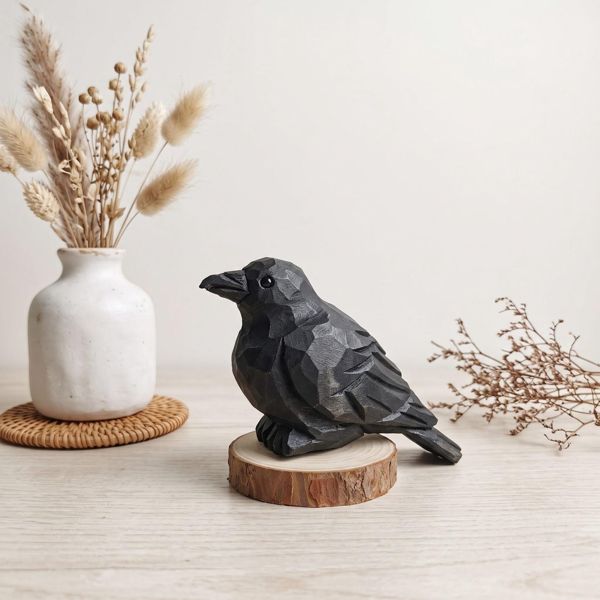
Wrap each piece in acid-free tissue or soft cloth and keep it in a box with a little padding, in a dry room rather than a damp loft, garage or cellar. This is useful for seasonal pieces such as the Wooden Crow, which many people only display in autumn, or hanging pieces that come out for Christmas.
Check stored pieces once or twice a year for signs of damp. If you see any, move the box somewhere drier and let the piece air in a well-ventilated room before you put it away again.
You can browse more pieces in our collection, and our wood carving styles guide explains how the different finishes look.
Frequently asked questions
How do I clean a hand-painted wooden figurine?
Dust it with a soft dry brush and a soft dry cloth, holding the piece by its base. Avoid soaking it and avoid spray cleaners or wipes. If a mark remains, try a barely damp cloth on a hidden spot first, and dry the piece straight away.
Can wooden figurines go in direct sunlight?
It is best to avoid long periods of strong direct sunlight, which can fade painted colours over time. A bright windowsill that does not get hours of full sun is usually fine. If a piece sits in a window, turn it occasionally so the light is spread.
Is it safe to wash a wooden figurine in water?
No. Wood absorbs water, which can swell the carving and lift the paint. Do not soak wooden figurines or put them in a dishwasher. Dust them instead, and use only a barely damp cloth on a stubborn mark, drying the area straight away.
How do I look after unpainted wood?
Dust it gently with a soft dry brush, keep it away from damp and strong heat, and handle it with clean, dry hands. Natural wood can change in tone slightly over time. Keeping it out of strong sunlight helps it stay as it is.