Hand-Carved or Machine-Made? How to Tell Wooden Figurines Apart
Look at four things: the tool marks, the paint, the base and whether two supposedly identical pieces actually are identical. Hand carving leaves knife strokes that change direction and depth, hand-painted colour that varies slightly from piece to piece, a base with visible hand finishing, and small differences between any two examples. Machine-carved and moulded pieces show uniform, repeating texture, perfectly even surfaces and exact sameness across a batch.
What is the actual difference between hand-carved and machine-made?
A hand-carved figurine is shaped by someone working a blade against wood, piece by piece, so every example carries the small variations of that person's hands: stroke depth, angle, pressure. A machine-carved piece is cut by a computer-guided router or a duplicator following a master, so every example repeats the same tool path. A moulded piece — pressed sawdust compound or cast material — is not carved at all; it is a copy of a master model.
None of these is secretly 'bad'. Machine carving produces consistent quality at prices hand work cannot match, and moulding reproduces detail no blade could reach. But the differences are visible, and they are honest ones: if you want a piece that exists once, or a figurine you can have engraved as a one-off gift, it helps to know what you are actually looking at before you buy.
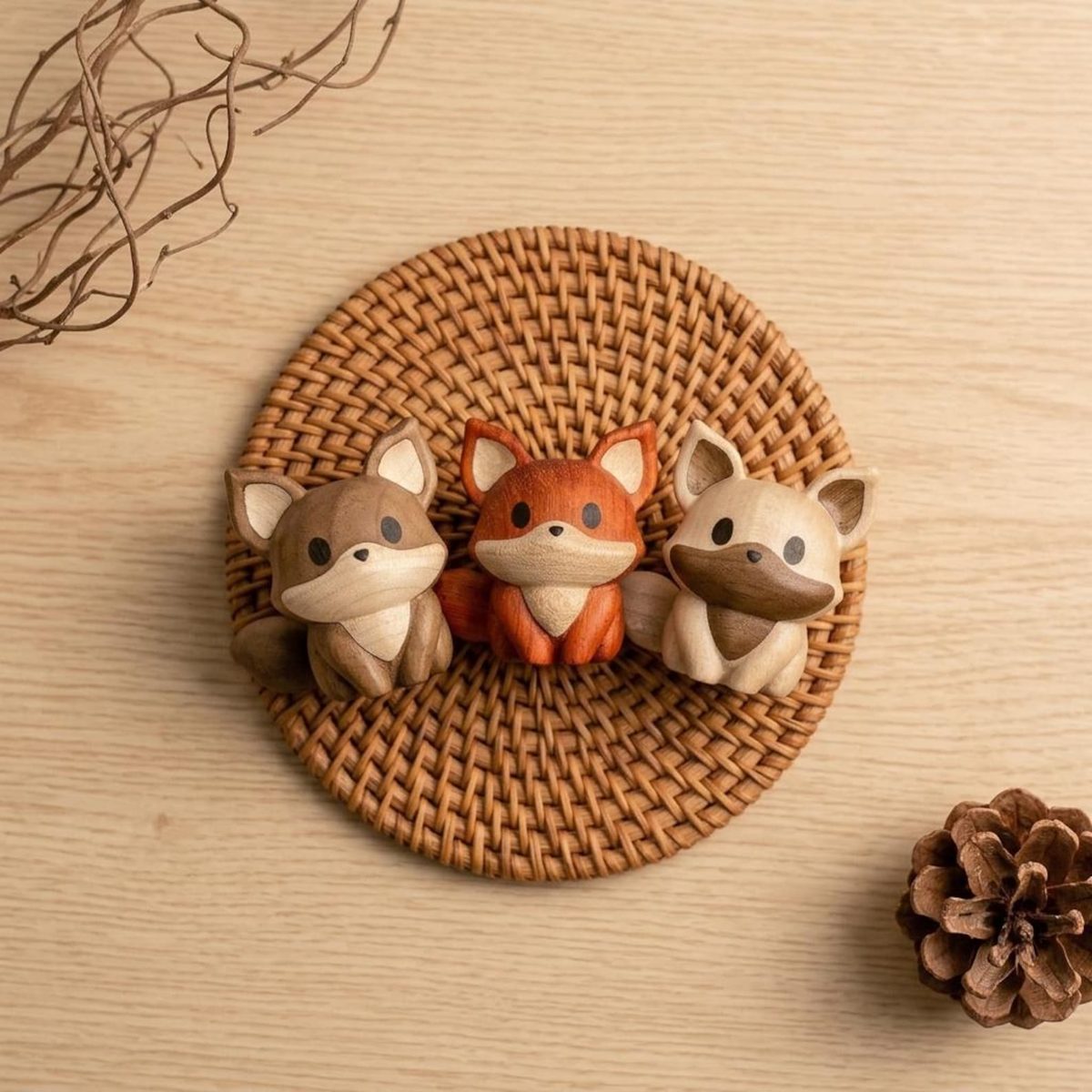
What should the tool marks tell you?
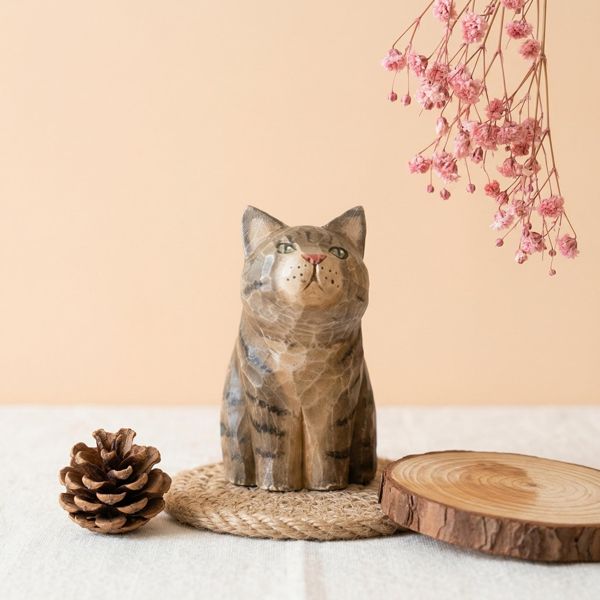
Turn the piece towards the light and study the carved surfaces. Hand knife work changes character across the figure: strokes follow the muscle of a leg, fan out where a curve tightens, deepen where the carver pushed and lighten where they eased off. Even a carefully sanded hand-carved piece keeps a rhythm to its marks that a machine does not.
Machine carving is the opposite: texture repeats at a constant spacing and depth, because a router bit followed the same path every time. Fur carved by machine looks like corduroy — neat, parallel, identical on both flanks. It can be genuinely attractive, but uniformity across the whole surface is the fingerprint of a cutting head, not a hand.
Moulded pieces show no tool marks at all. Their surfaces are copies of whatever the master model had, often slightly soft-edged, and may carry faint flow lines from the material. On a wooden figurine, a surface that looks smooth in a way carved wood never is — think of the difference between planed timber and moulded plastic — is a sign to check the base next.
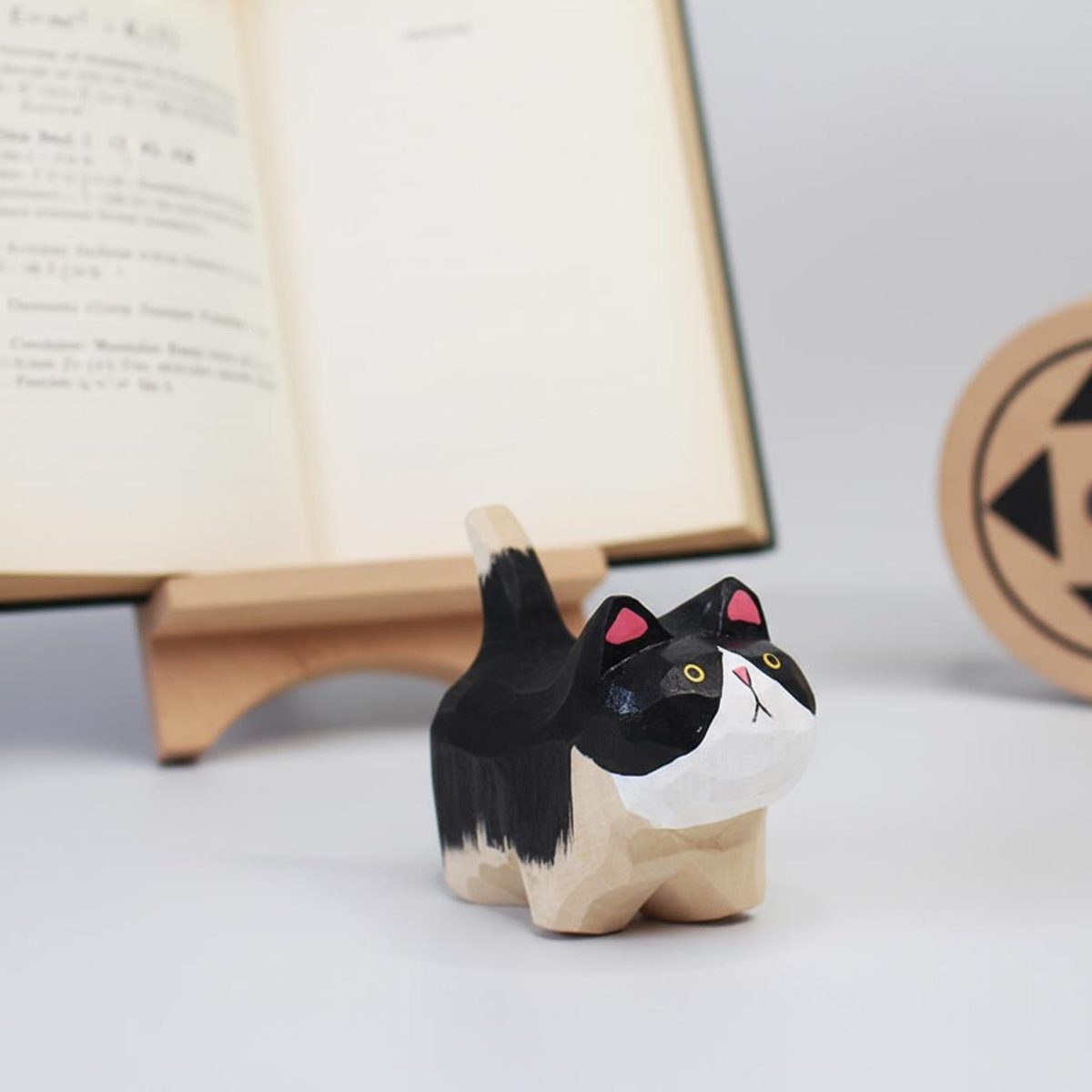
How does the paint finish give it away?
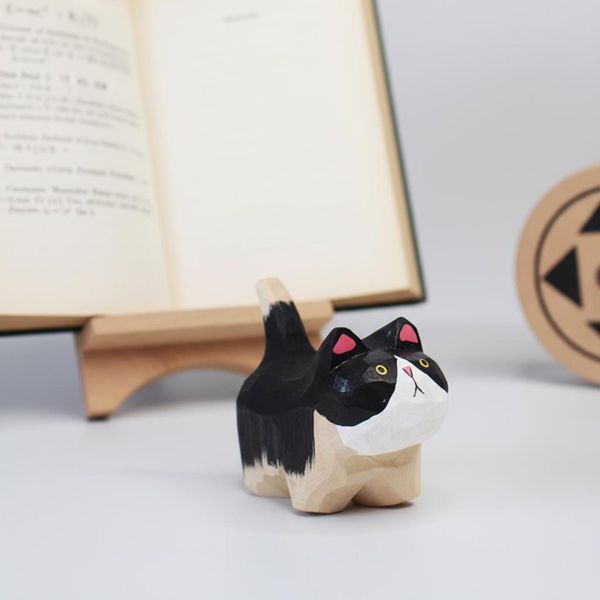
Hand painting is done brush by brush, and brushes are inconsistent in the friendliest way. Look for visible stroke direction in the fur or feathers, colour that pools slightly differently on each side of a stripe, and highlights placed by judgement rather than by template. On our own Faceted Tuxedo Cat, for instance, the grey edge of each white patch softens a little differently on every piece, because a person painted it.
Machine finishing is even: spray coats and printed colour land at identical thickness, edges are crisp to the micron and identical on every example, and two pieces side by side are indistinguishable. That is precisely its strength for large displays — and precisely what you will not find on hand-painted work.
A fair warning in the other direction: hand-painted means small differences from the product photograph, too. At our studio every piece is carved and painted by hand, so the listing photographs show one example, and yours will be its own version of the same animal. Treat any listing that promises pixel-identical hand-painted results with suspicion — the two claims cannot both be true.
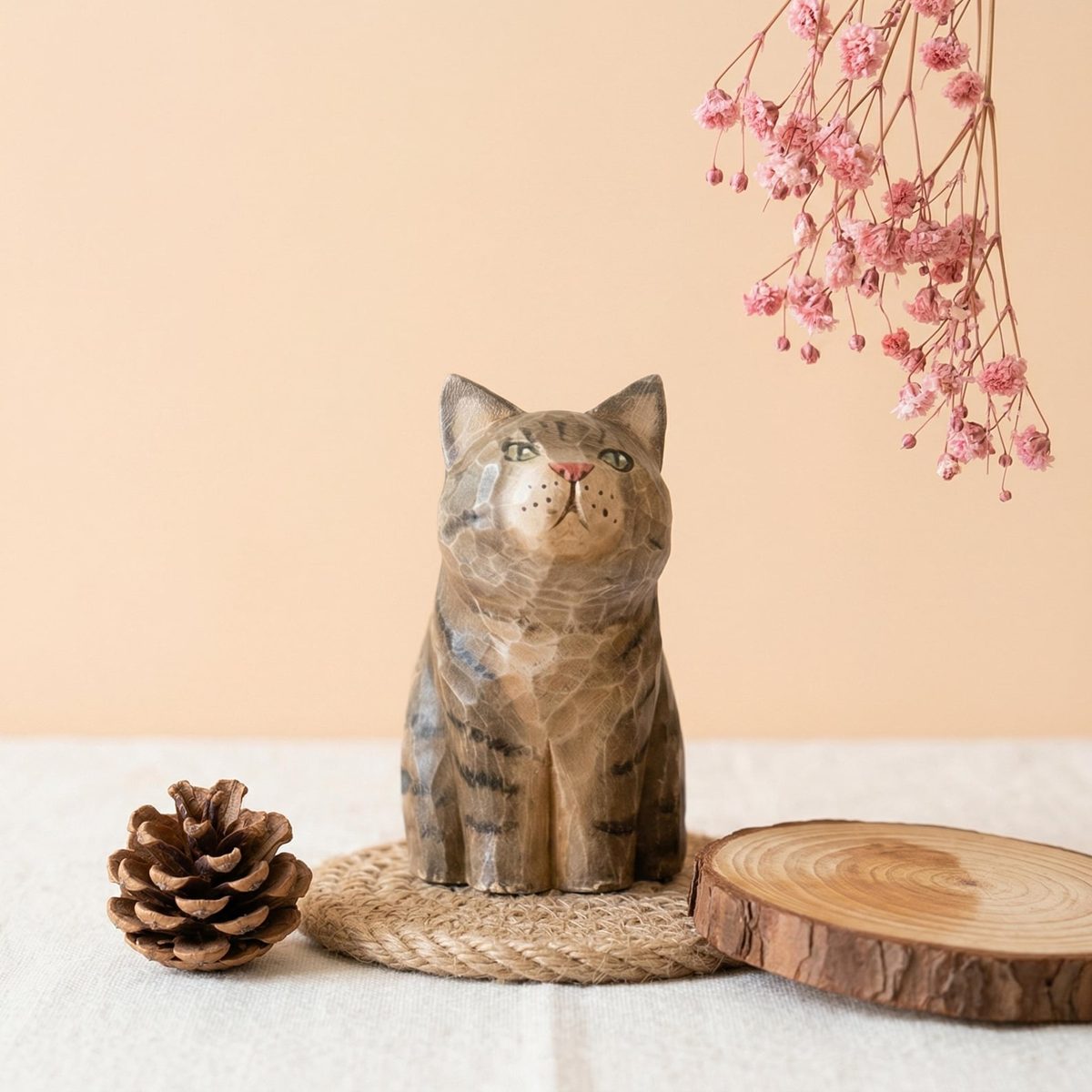
What can the base reveal?
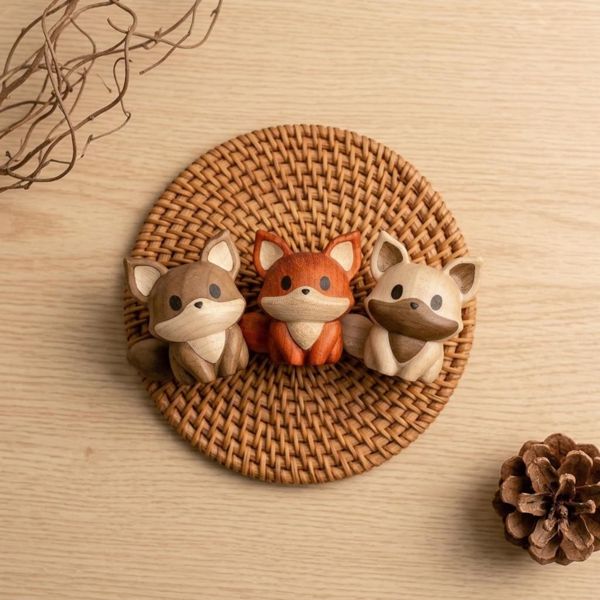
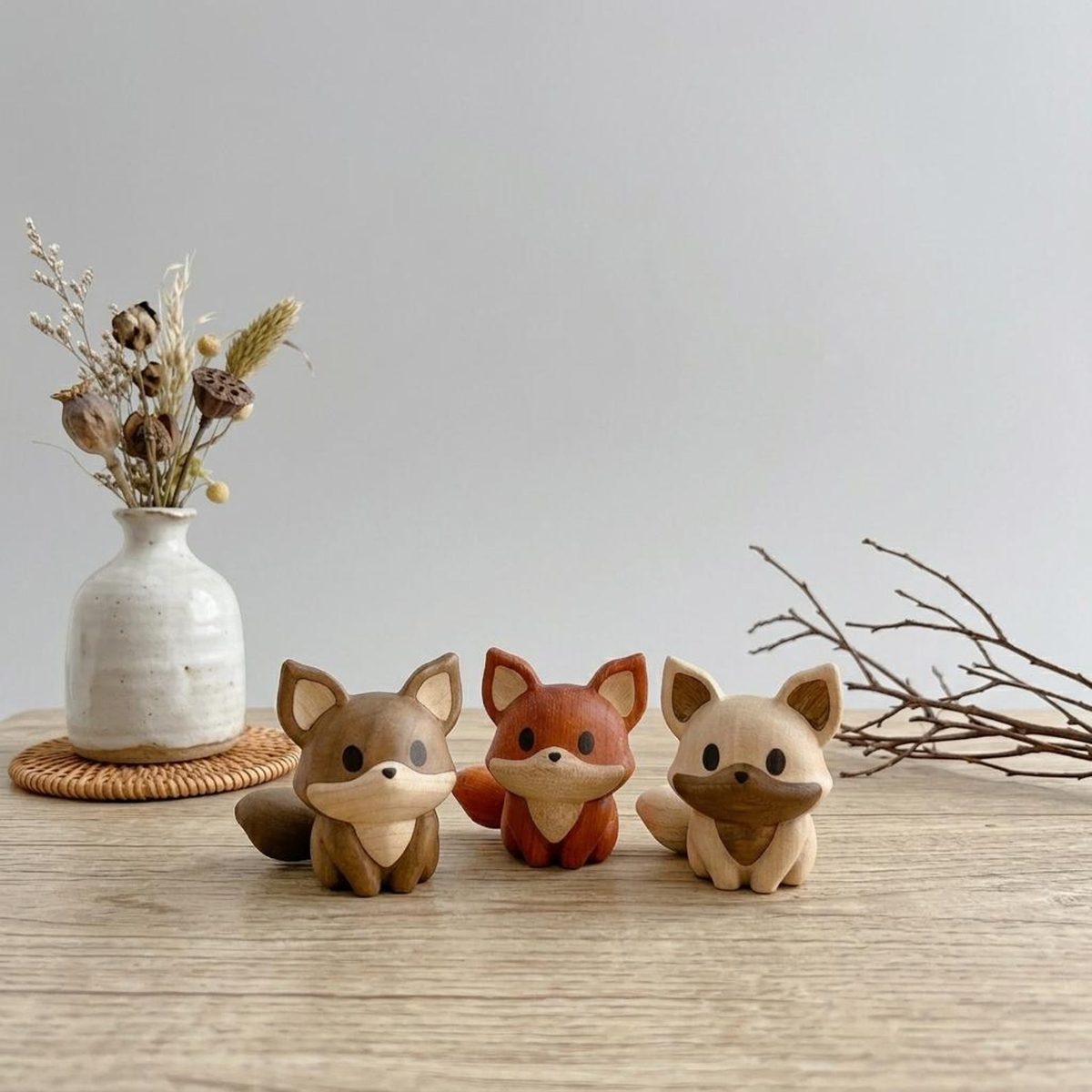
The underside is the fastest check of all, and almost nobody looks there before buying. A hand-carved base shows hand finishing: saw or knife marks from shaping, sanding that follows the wood rather than a perfect plane, wax or felt applied a little unevenly. Our Natural Wood Fox, which leaves the timber unpainted, shows its hand-sanded surfaces openly — there is no colour to hide the tool work under.
A machine-carved base is often perfectly flat with a circular tooling pattern, or it carries the small round mark where the cutter held the blank. A moulded piece is the giveaway of last resort: look for a seam line running around the edge where the mould halves met, a small round gate mark where material was injected, or a faint parting ridge across the bottom.
None of these marks is a defect in itself — a seam is simply what moulding is — but if a seller describes a piece as hand-carved from solid wood and the base shows a mould seam, you have your answer in five seconds.
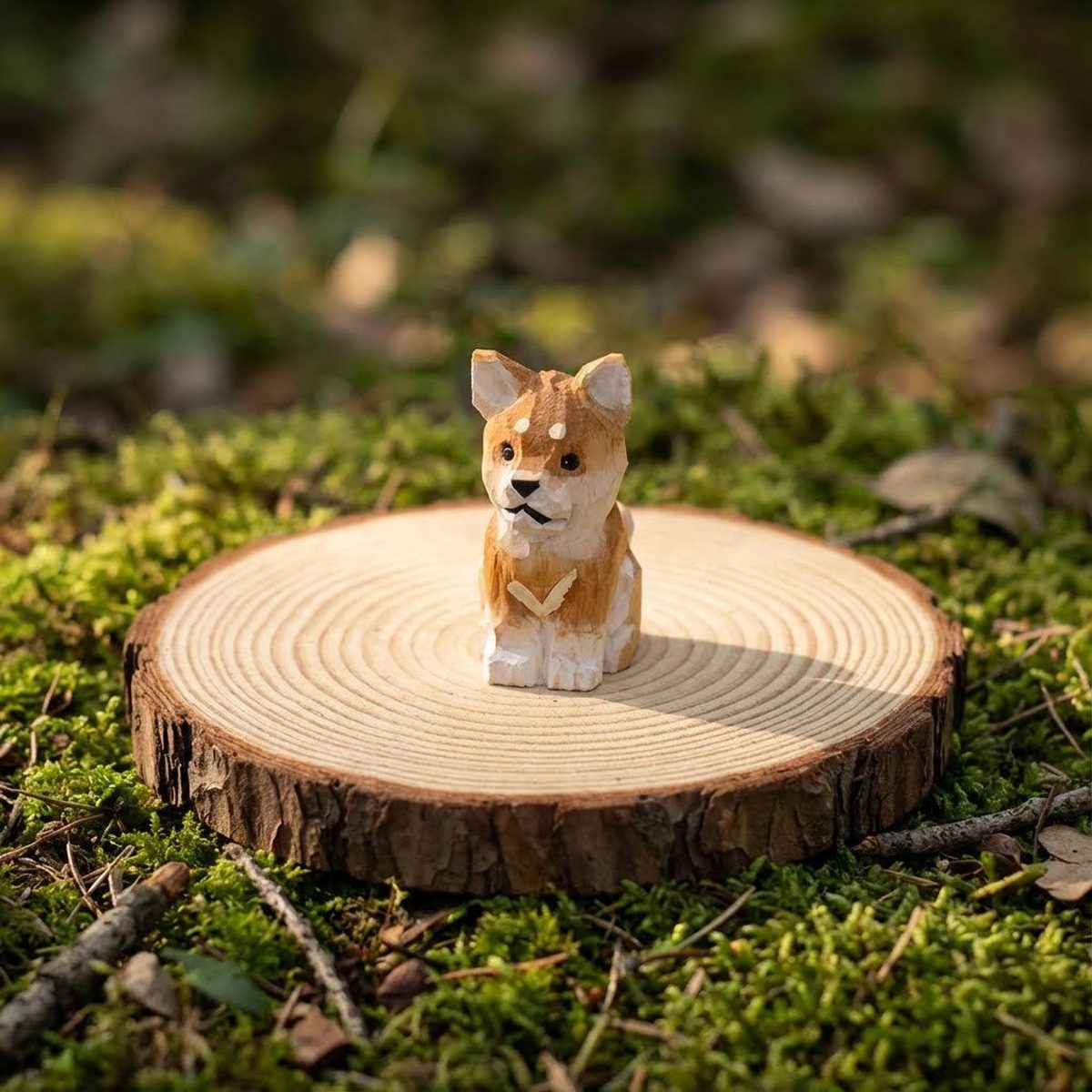
Why do two pieces from the same batch differ — or not?
Buy two hand-carved examples of the same design and line them up. The silhouettes will match, but the details will not exactly: one cat's tail curls a millimetre higher, one dog's painted muzzle sits a shade warmer, the engraved letters of each base land slightly differently. Handmade production means each piece passes through human hands separately, and those hands are never calibrated machines.
Machine-carved and moulded batches show the reverse: any two examples are interchangeable, sometimes to the point that parts from one fit the other. Uniformity is the whole economic point of the process, so perfect sameness is not a fault — but it is a test. If a shop offers 'hand-carved' pieces in quantity and every one is dimensionally identical to a fraction of a millimetre, the process was not hands.
For a gift buyer the batch question is practical: if you want a piece that is recognisably one-of-a-kind, hand carving delivers that automatically. If you need twenty window displays to look identical, that is the machine's job, and it does it well.
Is machine-made worse than hand-carved — and which should you buy?
Worse is the wrong frame. Machine carving wins on consistency, speed and price, and for symmetric or highly repetitive designs it is the sensible production method; plenty of good-quality, long-lasting decorative pieces are made this way. Hand carving wins on individuality, on the warmth of a surface a person actually shaped, and on anything personalised — a one-off carving can be engraved with a name in a way a production run cannot economically match.
Quality lives in materials and finishing within either process: well-dried timber and clean sanding beat careless work whatever cut it. What hand carving adds is not durability but character — the visible evidence of time spent, which is exactly what many people are paying for in a keepsake, a memorial piece or a gift that is meant to feel chosen rather than stocked.
We are hand-carving specialists, so decide accordingly: our figures are all carved and painted by hand, and the collection shows the range. If you want a deeper read on carving styles before choosing a piece, our guide to faceted, textured and natural carving styles covers how the look differs within hand-carved work.
Frequently asked questions
How can you tell if a wooden figurine is really hand-carved?
Check four things. Tool marks should vary in direction and depth rather than repeat at machine-even spacing. Paint should show brush-level variation rather than perfectly uniform spray. The base should carry hand-finishing traces rather than a flawless flat or a mould seam. And two examples of the same design should differ slightly — exact sameness across a batch points to machine or moulded production.
What does a mould seam on a figurine mean?
A seam is the faint line where two halves of a mould met during production, sometimes with a small round gate mark where material was poured in. It means the piece was cast or pressed from a master model, not carved — common in resin and in pressed wood-compound figures. A seam does not make an item bad, but it is incompatible with a claim of being hand-carved from solid wood.
Do hand-carved figurines have imperfections?
They have hand traces, which are not the same as flaws: a stroke that fades where the carver eased off, grain that steers a curve slightly, paint coverage that varies by a hair between pieces. Structural problems — splits, loose joints, chipped edges on arrival — are genuine defects and worth returning. Listings for honest handmade work usually state that each piece varies a little from the photograph.
Is a machine-carved wooden figurine lower quality?
Not necessarily. A machine-carved piece in well-chosen timber, cleanly sanded and properly finished, can outlast a careless handmade one. What it lacks is uniqueness rather than quality: every example is identical, and personalisation is usually limited or unavailable. Judge the material and the finishing first, then decide whether individuality matters enough for the higher price of hand work.
Why do hand-carved figurines usually cost more?
Because the cost is time. Each piece is shaped by hand, sanded and painted individually, so labour scales with every figurine instead of being spread across a production run as it is with machine carving or moulding. The premium buys a piece nobody else owns exactly, along with the option of one-off personalisation such as an engraved name — which is why hand-carved work dominates the personalised and memorial gift categories.