First Trade Order Checklist: Questions to Ask a Giftware Supplier
Before a first trade order, ask a giftware supplier about the minimum order value, whether trade prices are published, lead times for stock and personalised pieces, delivery thresholds, damaged-goods handling and how fast you can reorder. Then check the range itself: sizes, finishes, whether any pieces can be engraved and how they are labelled. Jodie's Wood Studio's own answers are a £150 minimum first order, free UK delivery over £300, in-stock dispatch within 3 days and private trade prices after an enquiry (UK terms).
What should you ask a giftware supplier before your first order?
Most disappointing first orders come from questions nobody asked. Ask the six below in one message rather than one at a time — a supplier's answers, fast or slow, complete or evasive, tell you as much about reordering from them as the answers themselves do. The questions that matter most are:
- the minimum order value, and whether it differs for a first order;
- whether trade prices are published openly or sent privately after an enquiry;
- lead times — how fast stocked pieces go out, and how long personalised or custom work takes;
- delivery thresholds and charges, and what happens to an order that falls just under them;
- how damaged goods are handled, and who pays for the return if one is needed;
- how fast you can reorder a line that sells faster than expected.
What should you check about the range itself?
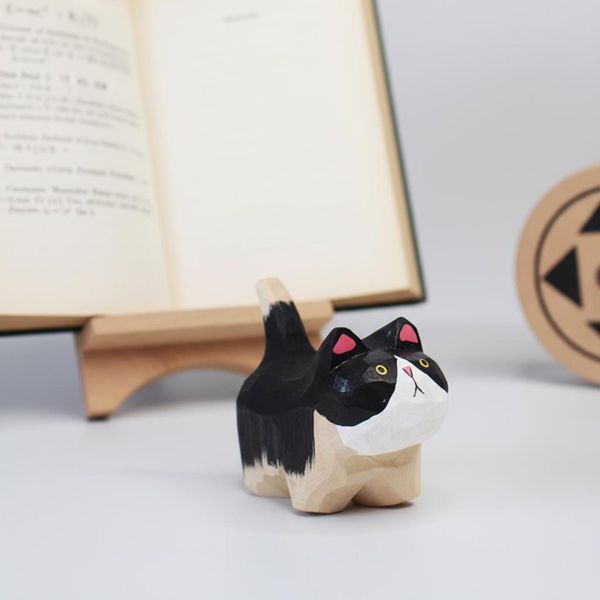
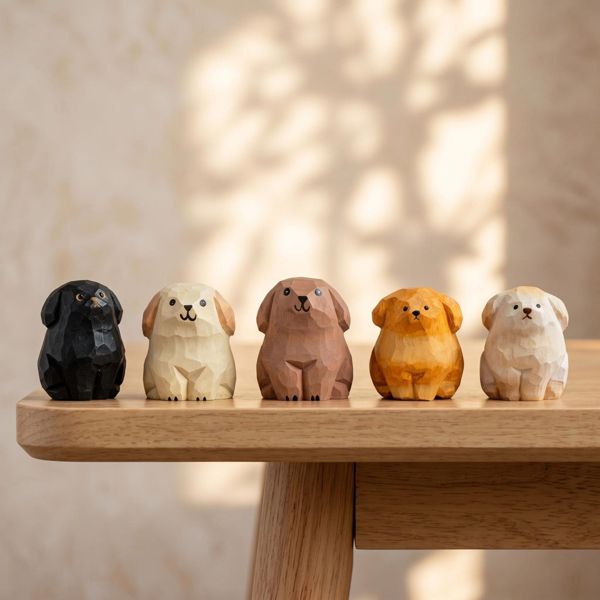
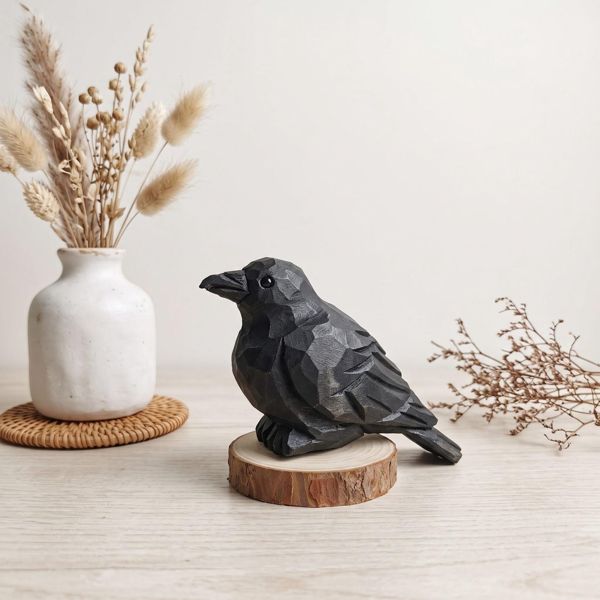
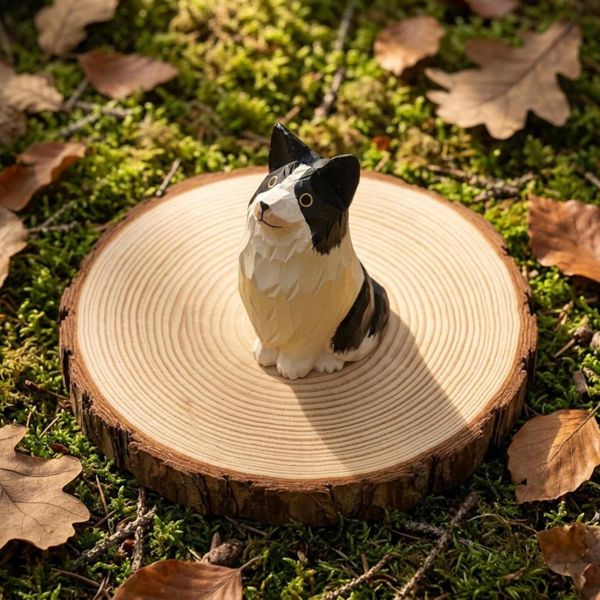
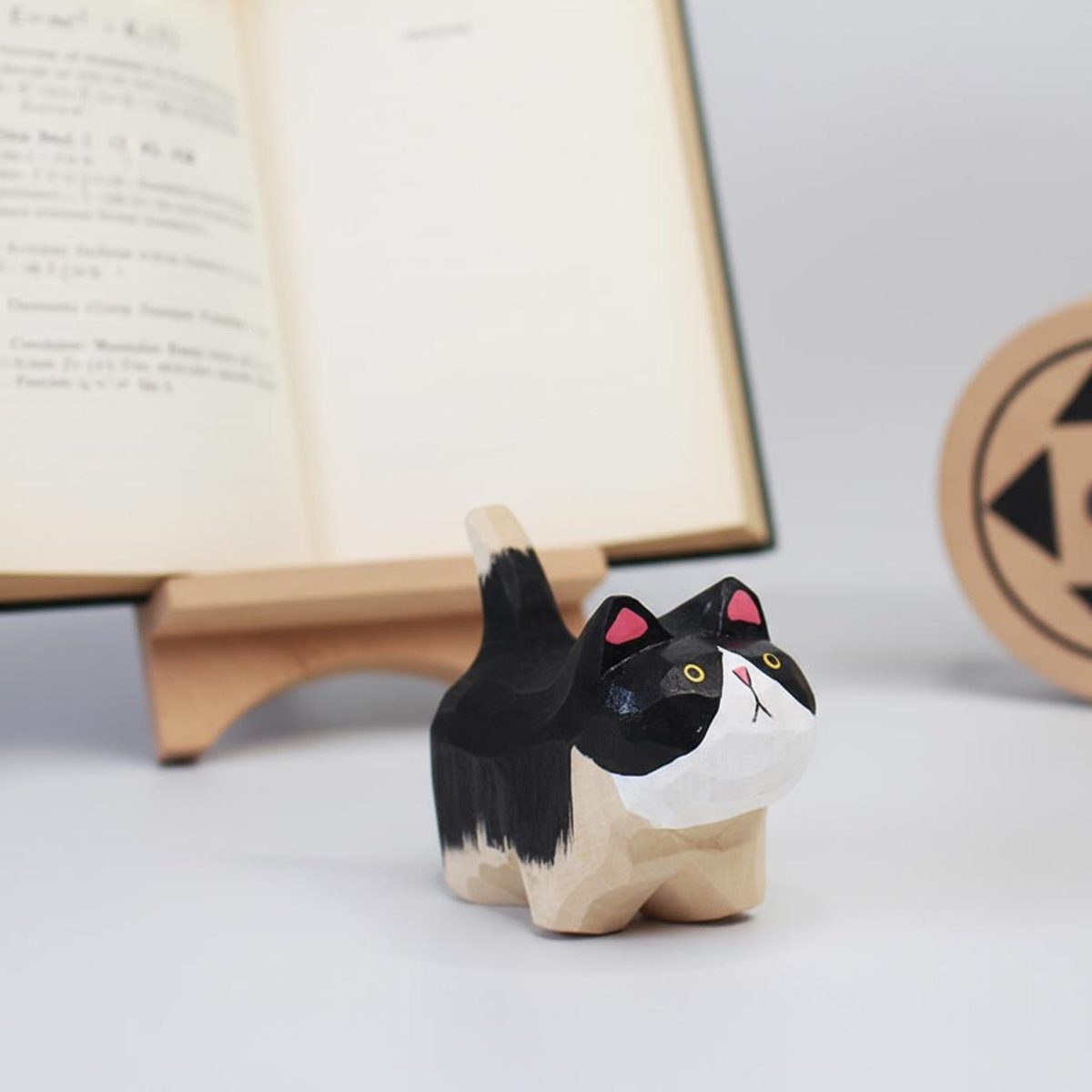
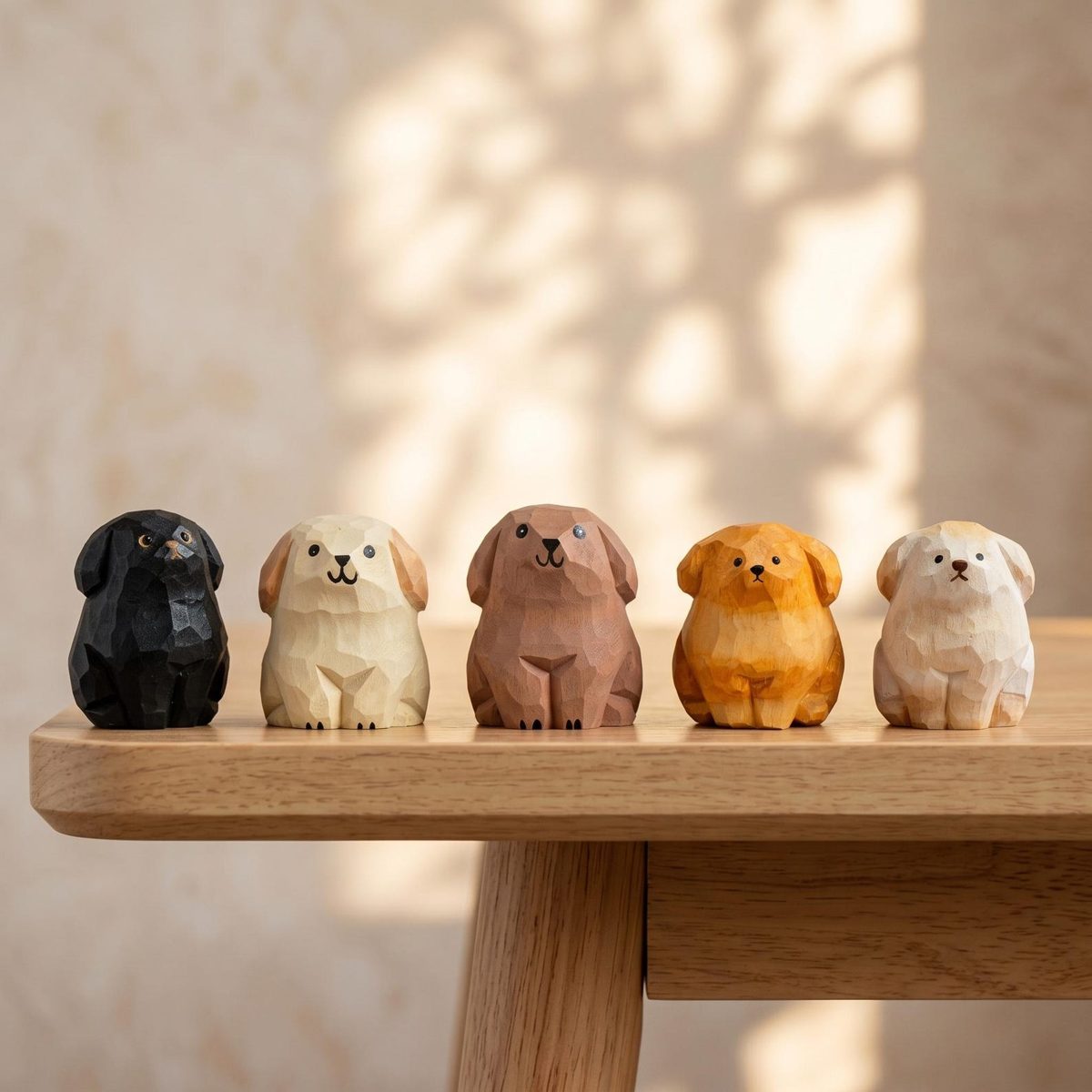
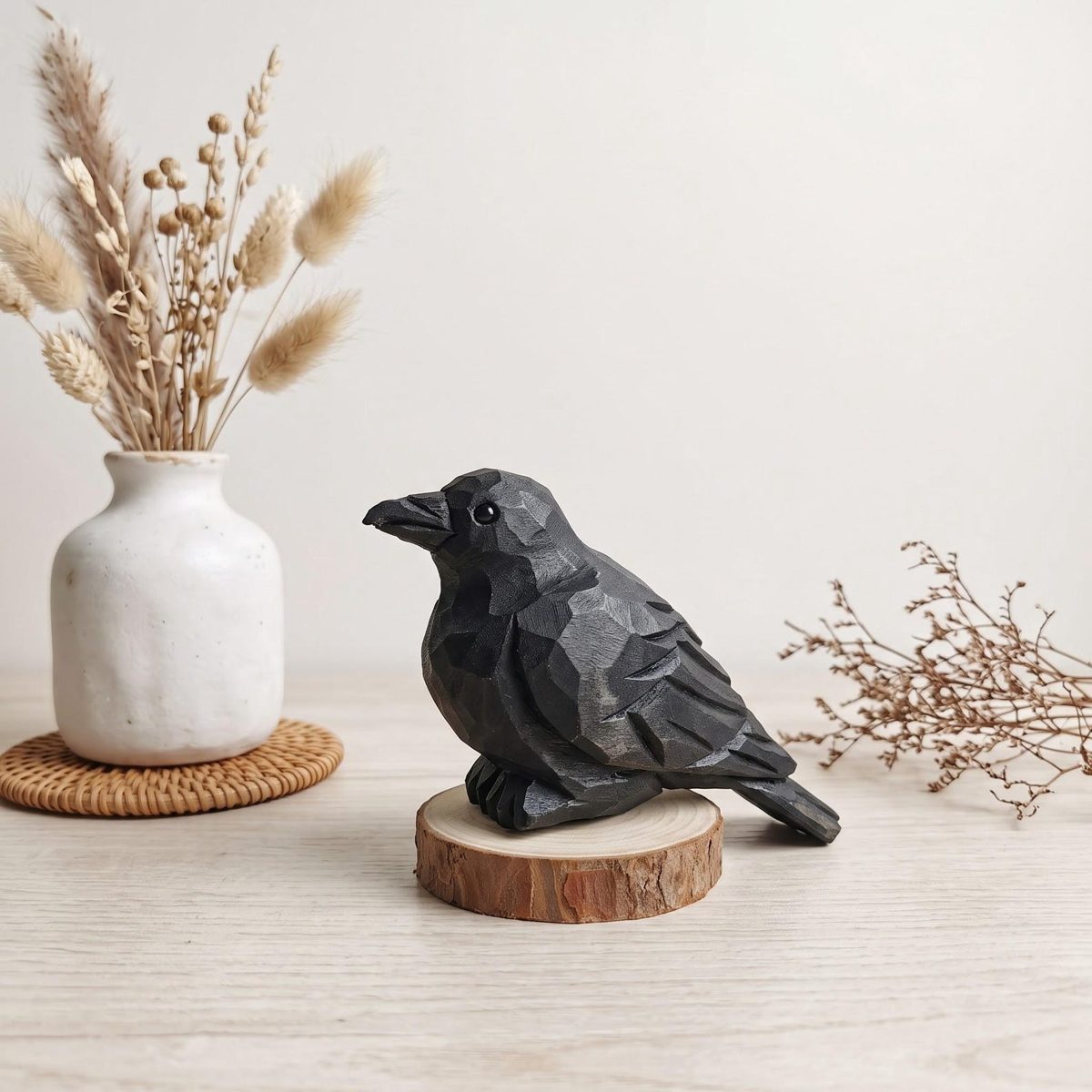
Terms are only half of it; the other half is whether the products will actually sell from your shelf. Check the sizes against your displays — most wooden animals sit in the hand, but ranges also include pocket-money pieces and larger centrepieces, and your shelf plan needs both to be deliberate choices. Look at how the range is finished: faceted cuts, textured carving and smooth natural wood read differently at a metre's distance, and a mixed range usually merchandises better than a single style.
Ask whether any pieces can be engraved, and how that works for a shop order — which designs, what wording fits, and how long it adds. Ask how decorative pieces are labelled, because a figure that is decorative rather than a toy needs to be sold and shelved as one, and clear labelling protects you at the counter. And ask how pieces are packed: a supplier whose boxes survive the post is a supplier whose arrivals you can put straight onto the shelves.
How do trade prices and payments usually work?
Many makers, ourselves included, keep trade prices private and send them after an enquiry rather than publishing a public trade list. That is normal for handmade giftware and is worth understanding before it surprises you: it lets the maker keep retail prices consistent everywhere and leaves room to quote sensibly for unusual orders. It does mean the checklist above cannot be completed from a website alone — the enquiry is part of the process.
Before you confirm a first order, confirm payment terms as well as prices. Ask what happens after an order is placed: whether there is an account to open or a simple invoice per order, and when payment falls due relative to dispatch. A small supplier will usually talk you through it in plain terms; if that conversation is hard to have before the money moves, it will be harder afterwards.
How do you open a trade account with a handmade giftware brand?
With a handmade brand, expect a conversation rather than a checkout. The usual sequence is: contact the brand as a business, with your shop's name and location and a line about what you stock; ask for the trade price list and terms; confirm minimums, lead times and payment; then place a first order sized to your footfall rather than to your enthusiasm. Handmade brands often keep capacity deliberately small, so the conversation also establishes what is realistic for both sides — a good thing to know early.
With Jodie's Wood Studio the process is exactly that. You send a trade enquiry through the wholesale page, telling us a little about your shop, and we reply with trade prices and the next steps for a first order. There is no public trade price list to download, and there is no form-filling theatre either — most first orders are settled in a couple of messages.

What are Jodie's Wood Studio's own answers to this checklist?
So you can benchmark us against whoever else you are comparing: our minimum first order is £150, UK delivery is free over £300, and stocked pieces dispatch within 3 days (UK terms). Trade prices are sent privately after an enquiry. For shops outside the UK we ship directly to your country, with delivery, taxes and duties quoted for your location before you confirm anything.
On personalisation: at retail, the designs with an engravable base carry a name, a date or a short message. On trade and bulk orders, any design in the range can be engraved — there is no shortlist of engravable pieces to work around, which matters if your customers ask for names on animals that are not on a standard engraving list. Custom pieces, where a design is made to your brief, run to roughly 15 days for a sample and about 30 days for bulk production after that, and we quote each job individually.
On the things we cannot put in a checklist: every piece is hand-carved and hand-painted, ships from our UK warehouse, and is labelled as a decorative item, not a toy. If any of that is unclear from the range pages, ask — it is what the enquiry stage is for.
How big should a first order actually be?
Smaller than it feels. A first order is a test of the supplier as much as a stock purchase: how the pieces look in person, how they pack, how the finish holds between batches. Choose a mixed range that lets you group a display — a few animals in two or three sizes, most small enough for the till area, one or two larger pieces for a window — and resist filling the shelf with your personal favourite.
What matters more than the size of the first order is the speed of the second. A supplier you can reorder from quickly turns a £150 test into a steady line; a supplier with slow restocking forces you to over-order upfront, which is how back rooms fill up with unsold stock. Ask the reorder question before the first order, not after it — and if the answers all check out, start the conversation.
Frequently asked questions
What should I ask a giftware supplier before placing a first trade order?
Ask about the minimum order value, whether trade prices are published, lead times for stock and personalised pieces, delivery thresholds, how damaged goods are handled, and how fast you can reorder. Ask too whether any pieces can be engraved and how decorative pieces are labelled. Our answers: a £150 minimum first order, free UK delivery over £300, in-stock dispatch within 3 days, prices sent after enquiry (UK terms).
How do I become a wholesale customer of a handmade giftware brand?
Contact the brand as a business with your shop name and location, ask for the trade price list and terms, and confirm minimums, lead times and payment before your first order. Handmade brands often keep capacity small, so expect a conversation about what suits your shop rather than an open checkout. With Jodie's Wood Studio you send a trade enquiry through the wholesale page and we reply with prices and next steps.
Can any design be engraved on a trade order?
Yes. At retail, engraving is offered on the designs that have an engravable base. On trade and bulk orders, any design in the range can be engraved with a name, a date or a short message, so a shop is not limited to a shortlist of engravable pieces. If your customers are likely to ask for personalisation, it is worth confirming the wording limits and timing with the supplier before you display the range.
How quickly can a UK shop restock wooden animals?
With us, stocked pieces dispatch within 3 days of an order (UK terms), which means a line that sells faster than expected can be back on the shelf within the same trading week rather than reordered months later. Custom and bulk engraved work takes longer — roughly 15 days for a sample and about 30 days for bulk production — so stock reorders and custom jobs work on different clocks. Ask every supplier to put their numbers on the table.
What should a supplier tell me about damaged goods and packing?
A straight answer on who pays when a piece arrives damaged, whether replacements are sent from stock, and whether the outer packing survives the post without extra wrapping from you. Ask it before the first order and note that handmade pieces carry small natural differences in grain and finish — that is normal and separate from transit damage. A supplier who shrugs at the question is telling you how the next conversation will go.